




Robot-Agnostic Automation: What It Means and What It Does Not Mean
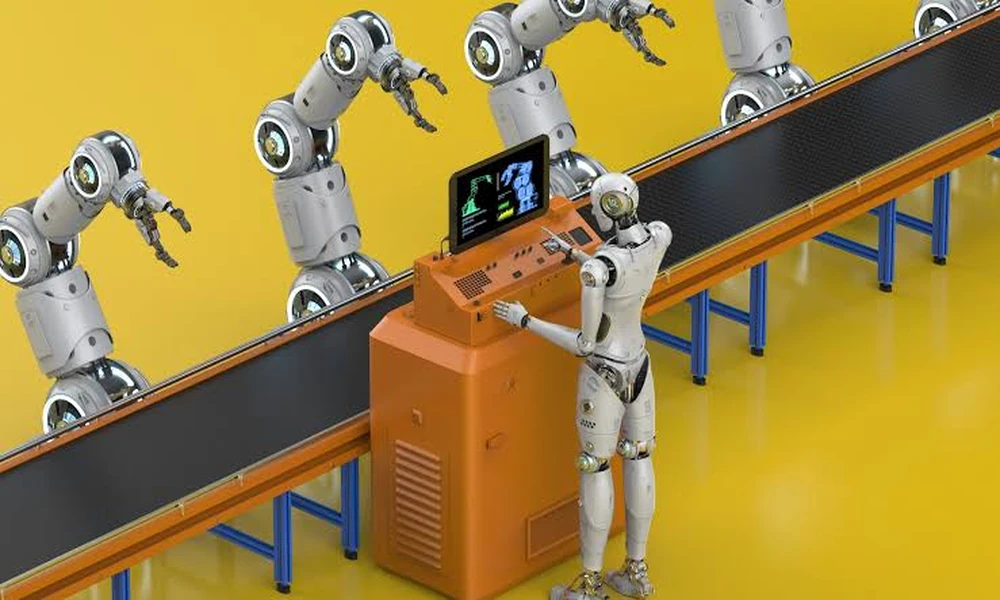
Industrial robotics is dominated by several major hardware manufacturers, each with its own controllers, programming tools and software ecosystem. For companies operating only one robot brand, this may present little difficulty. The situation becomes more complicated when a factory uses robots from several suppliers or wants future automation projects to remain less dependent on one hardware ecosystem.
This is where the term “robot-agnostic” has become increasingly common. It sounds straightforward, but it can easily be misunderstood.
Robot-agnostic describes architecture, not universal compatibility
A robot-agnostic automation platform is designed so that its main application logic is not permanently tied to one robot manufacturer. The software provides an abstraction layer between the production task and the specific programming environment used by the robot.
That does not mean the software automatically works with every robot available on the market.
Trener Robotics makes this distinction explicitly in its description of software-defined robotics. Acteris uses a robot-agnostic architecture, while its current validated robot support includes ABB, Universal Robots and FANUC. Additional compatibility therefore has to be considered separately from the architecture itself.
This is an important point for manufacturers comparing platforms. “Hardware independent” should never be interpreted as “all hardware supported.”
Why factories end up with mixed robot fleets
A company may standardise on one robot brand initially and still accumulate other systems over time. An integrator may choose one robot for a particular payload requirement, another may come with a purchased production line, and a third may be inherited through an acquisition.
After several years, the factory can find itself supporting multiple programming environments and controller generations. Each new application may require engineers with different knowledge.
A common software layer can reduce some of this fragmentation by expressing the application in terms of tasks rather than brand-specific robot commands. The hardware remains different underneath, but operators and integrators can work with a more consistent framework.
Reusable logic is one of the main attractions
Consider machine tending. Regardless of robot manufacturer, the basic workflow often includes picking a part, moving it into a machine, triggering the machining cycle and removing the finished component.
Traditionally, this logic may be recreated independently for every controller. A software-defined system can instead package parts of the behaviour as reusable robot skills. The implementation still has to communicate correctly with the supported robot, but the production logic does not need to be reinvented from zero.
Trener currently positions Acteris around this model, combining reusable skills with a standardised deployment and execution layer for machine tending and pick-and-place applications.
Brownfield automation is where the idea becomes interesting
Robot-agnostic architecture is particularly relevant when manufacturers want to modernise existing cells rather than purchase new hardware.
A factory may already own robots that remain mechanically useful but are difficult to redeploy because programming new jobs requires specialised knowledge. Adding a compatible software layer can potentially extend the usefulness of those assets without replacing the complete cell.
Whether this is possible depends on the exact robot, controller and cell architecture. Trener itself notes that retrofitting existing robot installations should be assessed case by case rather than assumed from the term “robot-agnostic.”
Standardisation still has limits
Different robots have different payloads, speeds, kinematics, safety capabilities and controller functions. A software layer cannot make those physical differences disappear.
An application developed for a small collaborative robot cannot automatically be transferred unchanged to a high-payload industrial arm simply because both are supported by the same platform. Tooling, reach, cycle time and safety requirements may still require redesign.
The real benefit is therefore software portability and consistency, not identical behaviour from every machine.
What should manufacturers verify?
Before selecting a robot-agnostic platform, manufacturers should ask which robot brands and controller versions are supported today, not merely planned for the future. They should also check what parts of the application can actually be transferred between robots and what still requires custom integration.
Used carefully, robot-agnostic architecture can reduce dependence on isolated programming environments and make mixed robot fleets easier to manage. Its value is greatest when viewed as a way to standardise application logic rather than as a promise that every industrial robot suddenly becomes interchangeable.